Place Guide
P.G.C. Hajenius: Amsterdam's Historic Cigar Shop
P.G.C. Hajenius is Amsterdam's most famous tobacconist, founded in 1826 and housed since 1914 in a monumental Art Deco building on the Rokin.
Updated · Cigars Amsterdam Editorial Team
Read Buying Tips →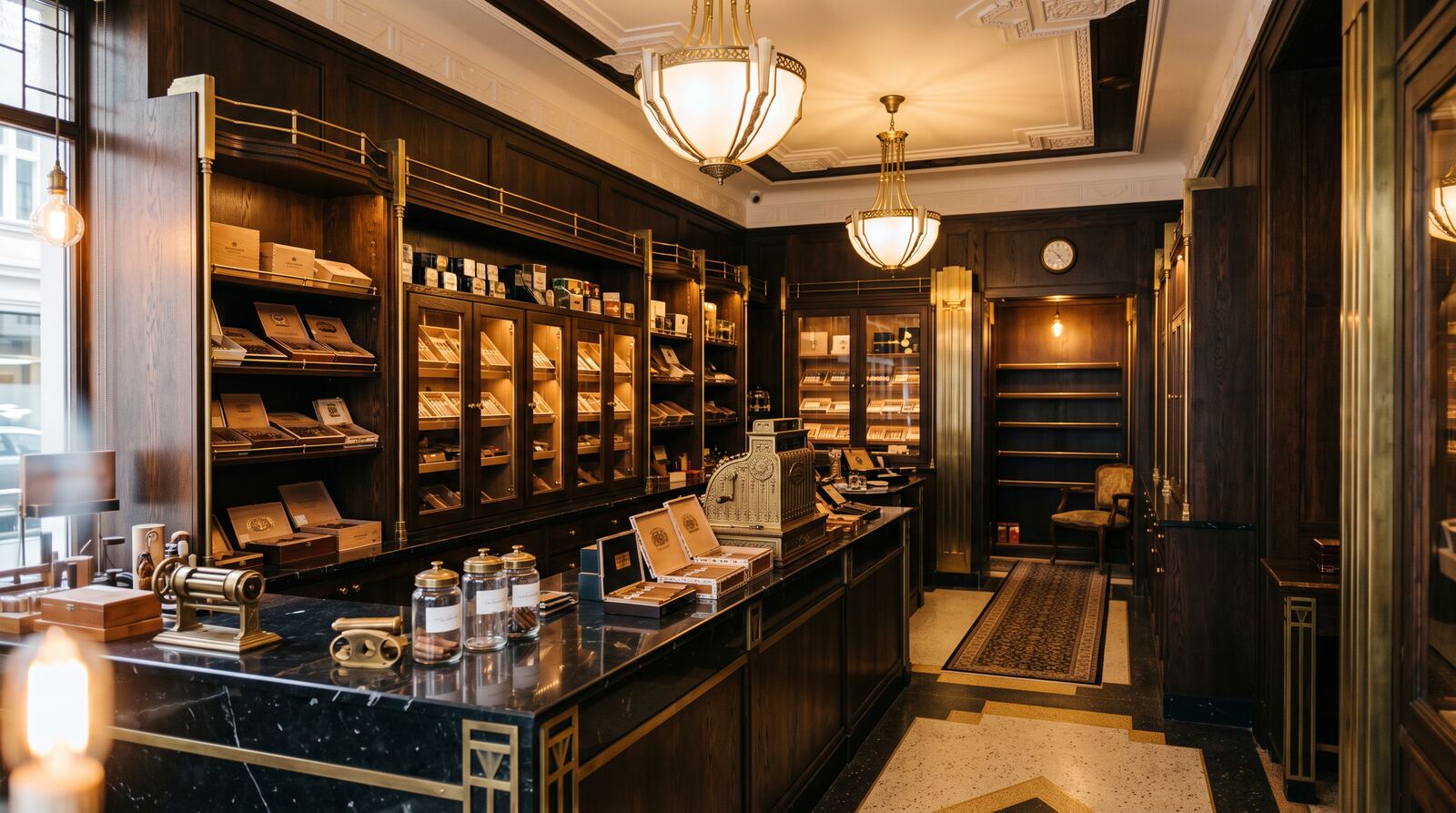
If you visit one cigar shop in Amsterdam, most guides will send you to P.G.C. Hajenius. The shop is part store, part museum: a grand Art Deco interior in the heart of the old city, with a history stretching back almost two centuries. We are independent and not affiliated with Hajenius.
Hajenius at a Glance
| Fact | Details |
|---|---|
| Founded | 1826, by Pantaleon Gerhard Coenraad Hajenius |
| Current building | On the Rokin, central Amsterdam, since 1914 |
| Style | Art Deco, with oak, leather, Italian marble and chandeliers |
| Known for | Premium cigars, its own-label cigars, pipes and smoking accessories |
| Location | Between Dam Square and Muntplein |
Quick answer: P.G.C. Hajenius is a historic Amsterdam tobacconist founded in 1826. Since 1914 it has occupied a landmark Art Deco building on the Rokin, near Dam Square, where it sells premium cigars, its own brand and smoking accessories.
The History of Hajenius
The company's story begins in 1826, when Pantaleon Gerhard Coenraad Hajenius moved to Amsterdam to open a premium cigar shop. He had skilled cigar makers produce cigars under his own name using high-quality tobacco from the Dutch East Indies (today Indonesia), and his cigars found favor with dignitaries, industrialists and royal households. In 1914 the business moved into its monumental building on the Rokin, where it remains today.
The Rokin Shop
The interior is the main attraction for many visitors. Dark oak cabinets, leather, Italian marble and ornamental chandeliers create a setting unlike a modern shop. Walk-in humidors hold premium cigars from Cuba, the Dominican Republic, Nicaragua and elsewhere, while display cases show pipes, lighters and accessories. Photography rules vary, so ask staff before taking pictures inside, and keep in mind it is a working shop.
Hajenius Cigars
Like its founder's original business, Hajenius sells cigars under its own name, alongside major premium brands. For background on the Dutch cigar style and its makers, see our sister site's guide to Dutch cigar brands.
Tips for Visiting
- Location: The Rokin is a short walk from Dam Square; trams run along it.
- Hours: Check the shop's own website for current opening hours before you go.
- Smoking: Dutch rules are strict; ask staff whether any smoking or tasting area is available. See smoking rules in Amsterdam.
- Buying to take home: U.S. travelers should read buying cigars in Amsterdam before choosing Cuban cigars.
- Age: You must be 18 or older to buy tobacco in the Netherlands.
Why Visit Even If You Don't Buy
Hajenius is one of the few places in Amsterdam where you can still see the atmosphere of a grand early-20th-century shop interior in daily use. Cigar lovers come for the humidors, but many visitors simply come to see the building, which shows how important the tobacco trade once was to the city's merchants. Allow time to look at the cabinets, the lighting and the historic displays, and be respectful of customers shopping.
Part of Amsterdam's Tobacco Story
Hajenius is one chapter in a long story of Amsterdam as a tobacco port and trading city. Read Amsterdam tobacco history for the wider picture.
Frequently Asked Questions
When was Hajenius founded?
The business traces its history to 1826, when P.G.C. Hajenius opened a premium cigar shop in Amsterdam.
Where is Hajenius in Amsterdam?
On the Rokin in central Amsterdam, a short walk from Dam Square.
Why is the Hajenius shop famous?
Its 1914 Art Deco interior, with oak, leather, Italian marble and chandeliers, makes it a landmark.
Does Hajenius sell Cuban cigars?
Yes, Hajenius sells premium cigars including Cuban brands, which are legal in the Netherlands.
Does Hajenius make its own cigars?
Hajenius sells cigars under its own name, continuing a tradition that dates back to its founder.